FLORAL INSTALLATION ARTISTSNatasha Lisitsa + Daniel Schultz
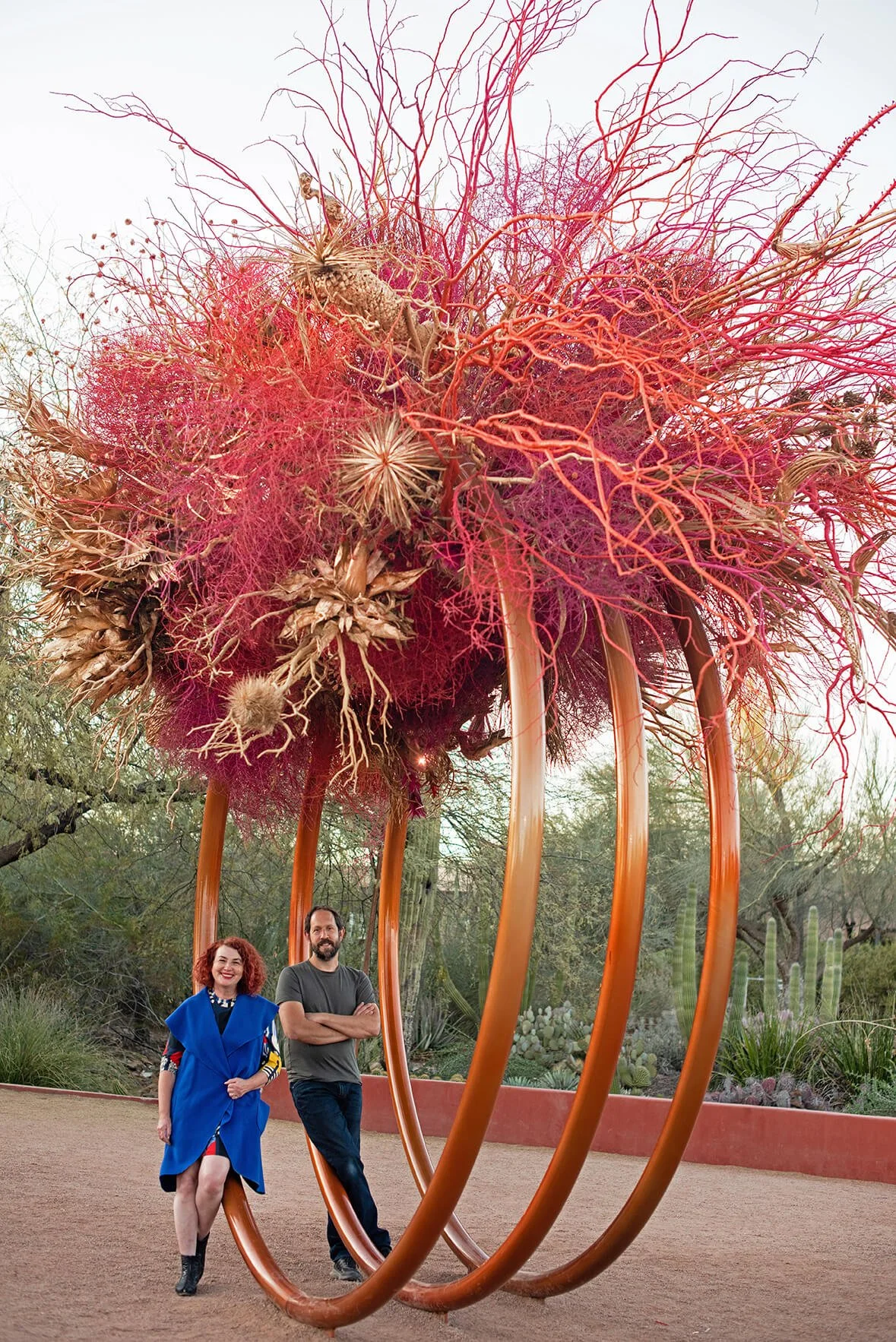
Natasha Lisitsa and Daniel Schultz, a wife-and-husband artist duo, are internationally renowned for their large-scale floral installations.
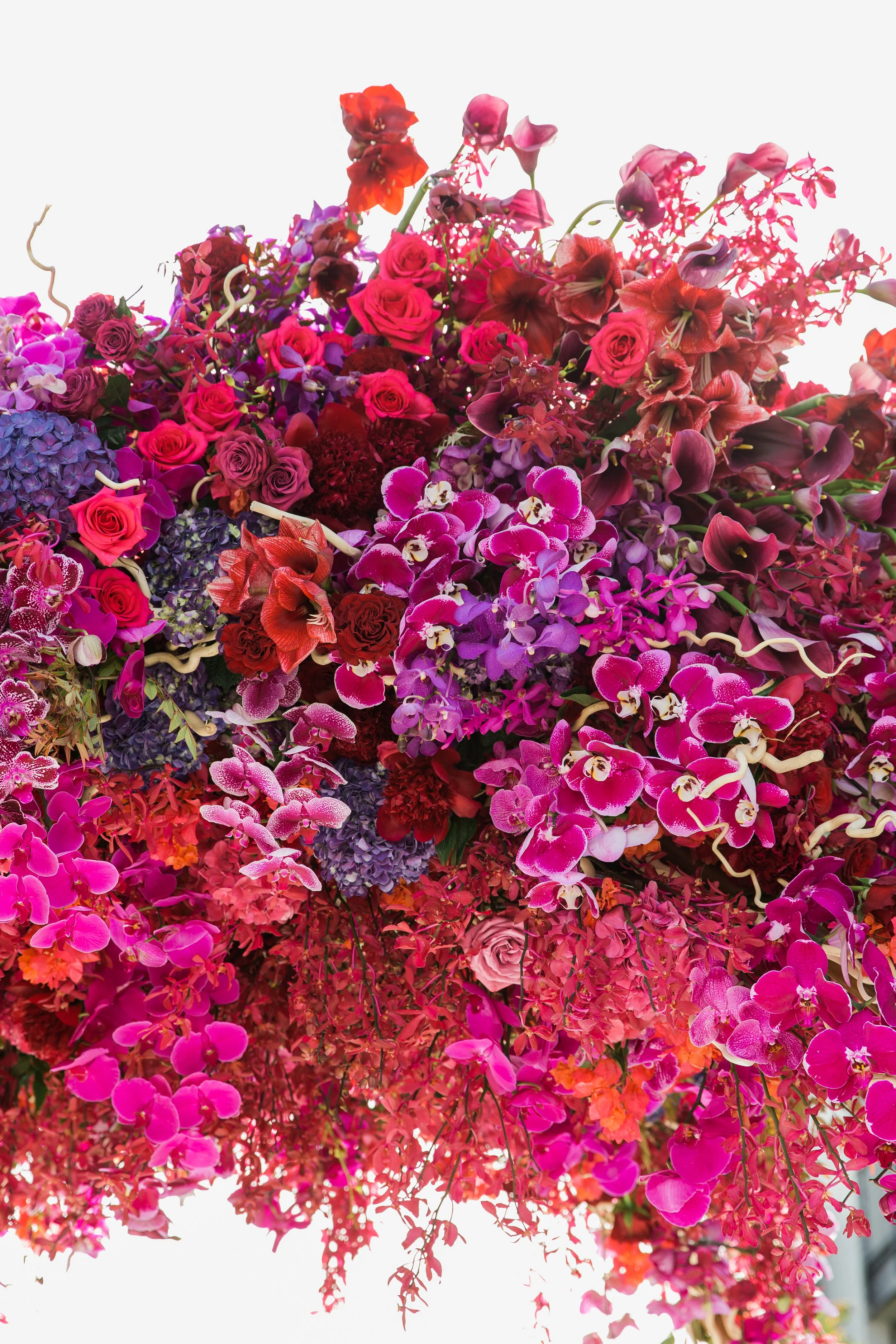
Natasha and Daniel work in the nexus of sculpture and floral art. Their modern art installations combine the emotion of flowers with fascinating structures of industrial materials. Their studio, Waterlily Pond, based in San Francisco, California, has been commissioned by museums, cathedrals, public spaces, and cultural organizations around the world to create large-scale floral art, with suspended installations up to 2000 pounds in weight.
Natasha and Daniel exhibited at the de Young Museum in San Francisco, San Diego Museum of Art, Desert Botanical Garden in Arizona, World Flower Show in Japan, Floral Art Russia, Iberiada Mexico, Festival Flora Spain, where they won the Grand prize, and the Singapore Garden Festival, where they won the Gold medal and Best in Show for their installation Stretching Time.
They have taught workshops and presented stage demonstrations around the United States and worldwide, with residencies in Shanghai, Bogota, Mexico City, and Qatar.
Natasha and Daniel’s work has been featured in numerous publications, including international design books Florever Wherever and International Floral Art, and Natasha’s own monograph Exuberant Floral Art published by Stichting Kunstboek in Belgium.
Natasha Lisitsa
I’ve been attracted to flowers since childhood, but I fell in love with them while studying Japanese Ikebana floral design. It helped me develop an aesthetic of clean lines and expressive movement. Combined with my love of color, this inspiration has resulted in a style that’s been called ‘Exuberant Ikebana’. I am intuitively drawn to explosive colors and eccentric color combinations, and visualize color palettes and textures rendered in flowers. The richness of their colors, shapes, and textures serves as my main inspiration.
Our collaboration started spontaneously and organically when I asked Daniel to help me create structures for a few floral artworks. We design together, sparking ideas and fueling each other’s creativity.
I do love the fleeting nature of our works. Just a short moment in time, like in nature — nothing is constant, seasons change, flowers bloom and wilt, fruit ripens and drops off the tree. But a new season comes and everything blooms again. Similarly, we see each new project as an opportunity to explore new ideas and try out new materials and techniques, whether inside a museum or out in a garden landscape somewhere in the world.
Daniel Schultz
My architecture school thesis project involved a long rusty ribbon of perforated sheet steel suspended from trees above a campus staircase. I talked about it using lofty words like intervention, site-specific, gestural, ephemeral, structural expression, and so on. At the time, it seemed a fun, hands-on intellectual exercise that thankfully secured a degree. But here I am twenty-five years later with a portfolio of installation art demonstrating, with varying amounts of success, these very concepts.
However, never then did I dream that flowers would be the medium enriching what would likely otherwise be, let’s say, minimalist sculpture. It has been my experience that most of us find wonder and inspiration in flowers – their color, beauty, and vitality. For flowers, and her enthusiasm for flowers, I have my wife Natasha to thank. Our collaboration started with a few sculptural pieces for events and soon grew with the invitation to contribute a small design to Bouquets to Art, a prominent show at the DeYoung Museum in San Francisco. The following year we suspended a 20-foot diameter, 1500-pound floral extravaganza overhead in the main courtyard, and since then installed dozens of large-scale pieces all over the world.
The execution of floral installation at this scale is always challenging. Committing to a design is a balancing act of responding to the site, choosing materials, considering logistics, and so on, in order to realize the most complete concept. Ultimately, the most fun for me is getting my hands dirty prototyping and making a piece.